Delivering Strategic Network Reinforcement
A regional electricity network operator engaged Lockrose to support the development of several strategic network reinforcement schemes. One key 132kV substation redevelopment required progression from assessment into delivery while navigating complex technical, land, stakeholder and regulatory requirements.
| 4 weeks | Preferred redevelopment option agreed |
|---|---|
| 3 major schemes | Supported as part of a wider network reinforcement programme |
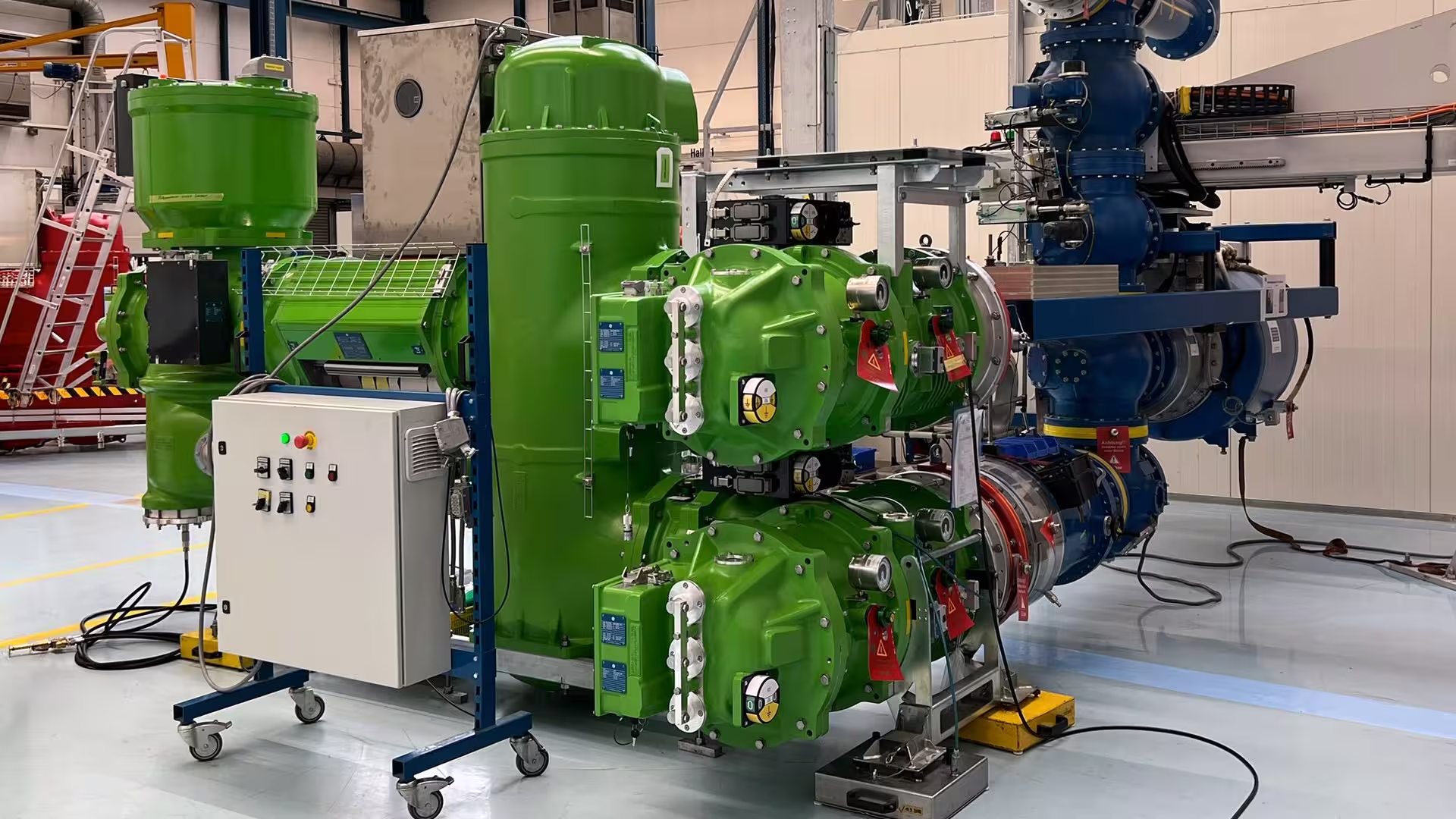
| Innovative technology | Integration of next-generation gas-insulated switchgear |
| Multi-party land requirements | Permanent and temporary land arrangements coordinated |
| Delivery assurance | Compliance and interface requirements managed across stakeholders |
| Programme security | Early procurement strategy developed to safeguard critical milestones |
Working collaboratively with the client and project stakeholders, Lockrose led the assessment of delivery options, established a preferred redevelopment strategy and secured approval within four weeks, maintaining momentum across the wider programme.
The challenge
The client was progressing a series of network reinforcement projects to increase network capacity, support new customer connections and enable future growth.
One of the schemes involved the redevelopment of an existing 132kV substation. The project presented several interconnected challenges, including the integration of emerging switchgear technology, complex land requirements, stakeholder coordination and planning constraints. Bringing these competing workstreams together into a clear, deliverable strategy was essential to maintaining programme momentum and securing timely approval.
Key considerations
Complex technical requirements
The scheme incorporated emerging switchgear technology and required alignment with industry standards, operational requirements and delivery partner processes. Technical decisions needed to balance innovation, compliance and long-term operational performance.
Land and stakeholder coordination
The project required a combination of permanent and temporary land arrangements involving multiple landowners and stakeholders, alongside planning, environmental and access considerations.
Programme certainty
The client needed confidence that the preferred delivery route was technically robust, commercially viable and capable of being delivered without impacting the wider programme.
Our approach
Lockrose provided senior programme management and strategic project leadership, coordinating the various technical, commercial and stakeholder workstreams required to develop a viable delivery strategy.
Developing a preferred delivery strategy
Lockrose led the options assessment and design review process, bringing together technical, commercial and programme considerations to identify the preferred solution. This enabled approval to be secured within four weeks and established a clear route into delivery.
Managing technical interfaces
Lockrose coordinated targeted technical assessments and stakeholder engagement activities to support technology integration, compliance requirements and delivery planning. This reduced uncertainty, clarified technical requirements and maintained progress across critical programme interfaces.
Coordinating land and stakeholder requirements
Working closely with project stakeholders, Lockrose developed practical solutions to address land and access requirements, enabling early project activities to progress and reducing delivery risk. Stakeholder engagement activities were aligned with programme objectives to support efficient decision-making and timely approvals.
Categories
The result
Lockrose established a clear and deliverable pathway for a strategically important network reinforcement scheme, enabling the client to progress from option assessment into project delivery with confidence.
Within four weeks, a preferred redevelopment option was identified, evaluated and approved, providing programme certainty and maintaining momentum across the wider portfolio of network reinforcement projects.
By coordinating technical, commercial, land and stakeholder workstreams, Lockrose reduced delivery uncertainty, strengthened decision-making and enabled early progress on critical project activities. The work also facilitated earlier engagement with key stakeholders, supported the development of land and access arrangements and enabled advance procurement of key equipment, safeguarding programme milestones and improving delivery flexibility.
What changed
- A clear and agreed delivery route established for a critical infrastructure scheme
- Earlier mobilisation enabled through a phased delivery strategy
- Technical requirements and technology integration considerations clearly defined
- Land, access and stakeholder requirements addressed through proactive engagement
- Stronger stakeholder relationships and improved alignment across project parties
- Critical equipment procurement progressed early, safeguarding programme milestones
- Increased programme certainty and confidence in delivery outcomes